Composition
What does the analytical specification actually tell you about the ingredient?
A serious protein ingredient is evaluated through composition, digestibility, amino-acid contribution, processing history and suitability within the complete nutritional programme.
Crude-protein percentage is an important analytical parameter—but it does not, by itself, describe the complete nutritional value of an ingredient.
Nutritionists must consider the protein source, amino-acid profile, digestibility, ingredient processing, anti-nutritional factors and the requirements of the target animal or application.
Use this framework to move beyond headline composition numbers and evaluate an ingredient as part of a complete nutritional system.
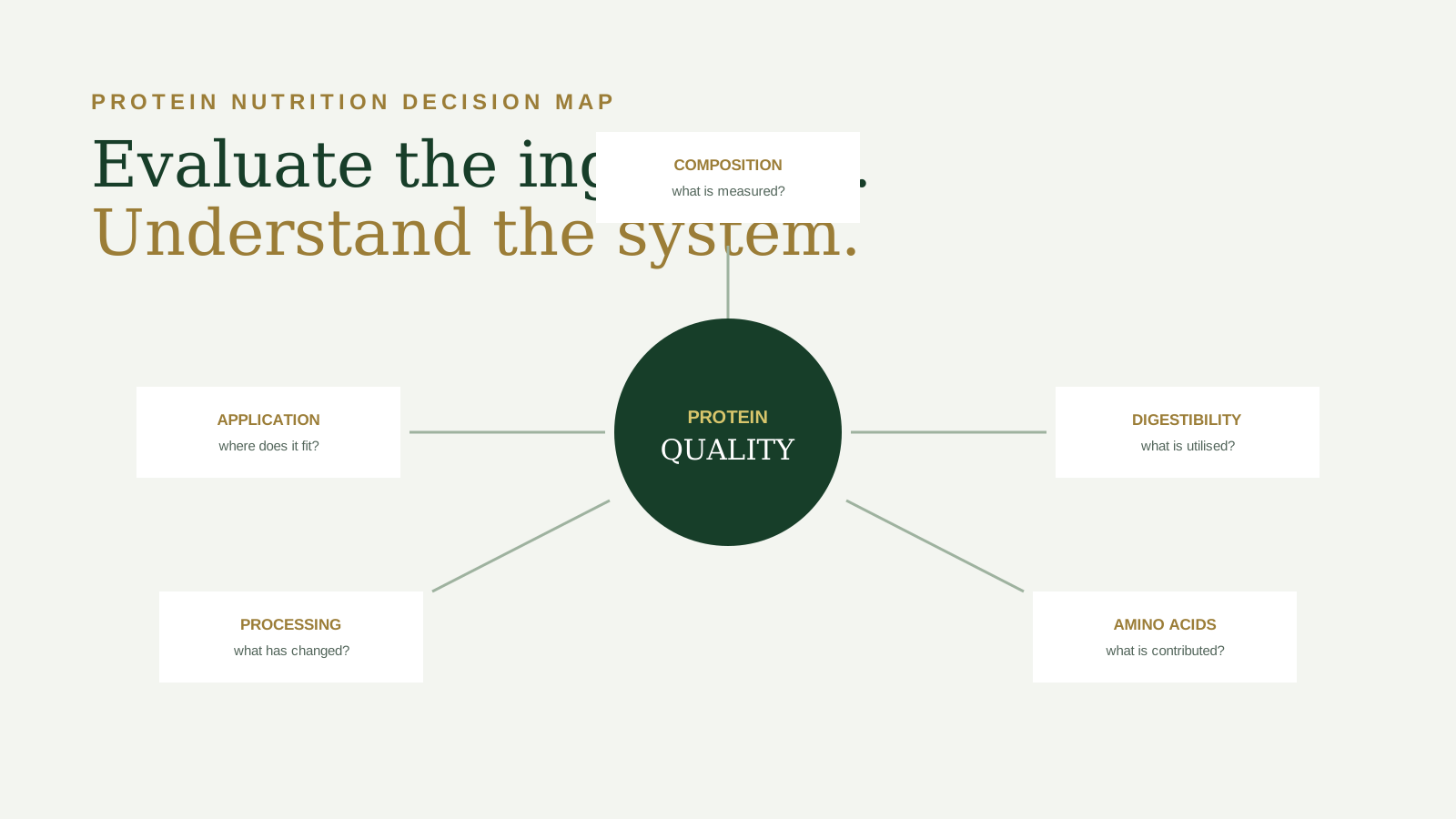
What does the analytical specification actually tell you about the ingredient?
How effectively can the nutritional components be digested and utilised?
How does the ingredient contribute to the amino-acid requirements of the complete programme?
How can thermal, enzymatic or biological processing influence ingredient characteristics?
Which species, life stage and formulation objective define suitability?
Proteins are complex molecules. The SOYPRO™ technology proposition describes enzymatic hydrolysis as part of a process intended to break complex protein molecules into smaller molecular-weight peptides.
This creates an important scientific distinction between measuring total crude protein and discussing the physical and nutritional characteristics of processed protein fractions.
EXPLORE THE TECHNOLOGY →Individual ingredients contribute to a wider amino-acid system. The practical question for the nutritionist is how the complete formulation meets the requirements of the target application.
Soy-based ingredients may contain naturally occurring compounds that are relevant to nutritional evaluation. Their importance depends on the ingredient, processing method and target application.
Processing can materially influence ingredient characteristics. Different processing routes serve different objectives and must be assessed against the final application.
Thermal processing can alter ingredient structure and reduce or manage certain heat-sensitive anti-nutritional components.
Enzymes can act on complex molecules and are central to the published SOYPRO™ processing proposition.
Fermentation introduces biological transformation and is presented as the second core element of the SOYPRO™ platform.
SOYPRO™ documentation is designed to support technical conversations with nutritionists, formulators, procurement teams and international partners.
A structured framework for evaluating protein ingredients beyond crude-protein percentage.
OPEN DOSSIER →02 / TECHNOLOGYEnzymatic hydrolysis and fermentation in the SOYPRO™ product proposition.
OPEN BRIEF →03 / PRODUCTPublished product identity and analytical composition information.
VIEW PRODUCT DATA →General nutritional science provides a framework for evaluating ingredients. Specific performance claims for a product, species or formulation should be supported by relevant analytical data, application evidence and technical validation.
START A TECHNICAL DISCUSSION →